
Feeling Foggy, Flushed, and Fatigued? Why Hydration is a Game-Changer in Menopause

Updated: Dec 13, 2025

If you’re finding yourself feeling extra sluggish lately, if the brain fog is rolling in thicker than usual, or if your skin suddenly feels paper-dry, it’s easy to point the finger straight at our fluctuating hormones. And you’re not wrong! But there's a powerful and surprisingly simple partner-in-crime that can make almost every single symptom of perimenopause and menopause feel worse: dehydration.
So many of us are walking around slightly dehydrated and don't even know it. The good news is that managing it is one of the most straightforward and effective ways to reclaim your comfort and clarity during this transition. Let's dive into why water truly is your new best friend.
Why Does Menopause Make Us So... Thirsty?
It’s not just in your head. Your body is fundamentally changing how it manages water, and it’s largely thanks to (you guessed it) estrogen.
The Estrogen-Hydration Link: Estrogen plays a key role in helping your body regulate and retain fluids. As estrogen levels start to do that perimenopausal rollercoaster and eventually decline, your body's ability to hold onto water decreases. You might find you're less resilient to a hot day or a tough workout than you used to be.
The Hot Flash & Night Sweat Cycle: This is a big one. According to The North American Menopause Society (NAMS), as many as 75% of women in the United States experience hot flashes. When you have a hot flash or wake up drenched from a night sweat, you are losing significant amounts of fluid. If you don't actively replace that lost water, you start the next day already in a deficit, which can... you guessed it... trigger more hot flashes. It's a frustrating, vicious cycle.
Your "Thirst" Signal Fades: To make matters more complicated, our natural thirst mechanism—that little alarm bell that says "Hey, drink something!"—can become less sensitive as we age. We may not feel thirsty until we're already well on our way to being dehydrated.
Dehydration: The "Symptom Amplifier"
Think of your body like a car. When the oil is low, every part of the engine has to work harder, runs hotter, and gets worn out faster. Dehydration does the same thing to your menopausal symptoms.
Intensified Hot Flashes
Your body's internal thermostat (the hypothalamus) is already being thrown off by hormone changes. When you're dehydrated, your body has a much harder time regulating its core temperature, which can lead to more frequent and more intense hot flashes. Staying hydrated gives your body the fluid it needs to cool itself down efficiently.
The "Wilting Plant" Brain Fog
This is one of the most frustrating symptoms. That "buffering" feeling, where you walk into a room and forget why, or you just can't find the right word? Your brain is over 70% water!
Here’s a helpful way to think about it: Imagine your brain is a lush, vibrant plant. When it's well-watered, its leaves are perky, and it's sharp and responsive. When it's dehydrated, it starts to wilt. That wilted, sluggish feeling is your brain fog, fatigue, and even dizziness. A fully hydrated brain is a clearer, faster brain.
Dryness Everywhere
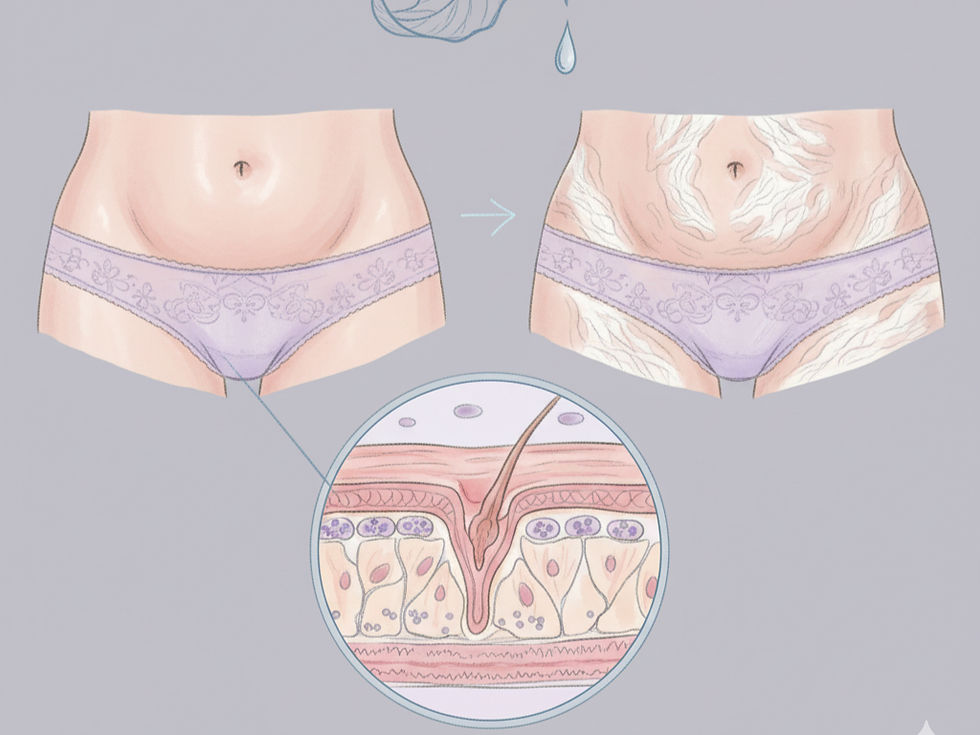
Estrogen is responsible for keeping tissues plump and moist. As it declines, we notice things get drier—our skin, our eyes, and our vaginal tissues. Dehydration is a "double whammy" that makes this dryness significantly worse.
Skin: Want to help those moisturizers and serums do their job? Hydrate from the inside out. Water helps keep skin plump and can reduce the crepey, dry feeling.
Vaginal Dryness: While hydration won't replace the need for localized estrogen or other treatments your gynecologist might recommend, being dehydrated will absolutely worsen vaginal dryness and discomfort.
Joint Pain: Water acts as a lubricant for your joints. If you're feeling more creaky and achy, poor hydration could be a contributing factor.
Your Simple Hydration Action Plan
Okay, so we know we need to drink more. But what does that actually look like in a busy life? The goal isn't to be perfect; it's to be consistent.
How Much is Enough?
The U.S. National Academies of Sciences, Engineering, and Medicine provides a great general guideline: an adequate daily fluid intake is about 11.5 cups (2.7 liters) of fluids a day for women.
Notice that says fluids, not just water. This includes all beverages and even water from your food. And remember, this is a baseline. If you are exercising, living in a hot climate, or having frequent hot flashes, you will need more.
Sip Smarter, Not Harder
Here are some practical tips to make hydration a habit, not a chore:
Start your day with a full glass. Before the coffee, before anything else. Put 16 oz. of water on your nightstand the night before. This rehydrates you after a night of (potential) sweats and kick-starts your system.
Get a bottle you love. This is a game-changer. Find a reusable 32 oz. bottle (that's 4 cups!) and make it your goal to drink and refill it twice a day. Keep it on your desk, in your car, and in your bag.
Set a simple schedule. Don't try to chug it all at once. Aim for one cup (8 oz.) every hour or so. Or, set alarms on your phone: one glass at 10 a.m., one at noon, one at 2 p.m., etc.
"Eat" your water. So many delicious foods are packed with water. This is an easy way to boost your intake. Think:
Cucumbers
Celery
Watermelon
Strawberries
Oranges
Soups and broths
Be Mindful of "Fluid Thieves"
Some of our daily favorites can unfortunately work against us, especially now.
Alcohol: That evening glass of wine might feel relaxing, but alcohol is a diuretic (it makes you lose fluid). It's also a very common hot flash trigger for many women.
Caffeine: A cup or two of coffee is usually fine for most women, but excess caffeine is also a diuretic. If you're a big coffee or black tea drinker, try swapping one of those cups for a hydrating, non-caffeinated herbal tea (like peppermint or chamomile).
Sugary Drinks: Sodas and sugary juices can be hard for your body to process and can sometimes worsen inflammation. Plain water, sparkling seltzer with a splash of fruit, or herbal tea is always your best bet.
You've Got This
This transition has plenty of challenges, but managing your hydration is one of the most powerful and simple acts of self-care you can do. It's not about adding another "rule" to your life; it's about giving your body the fundamental support it needs to navigate these changes with more comfort and clarity.
Listen to your body. That new headache, the afternoon slump, the extra-intense hot flash—ask yourself, "Have I had enough water today?" You might be surprised at how often a simple glass of water is the first step to feeling better

Comments